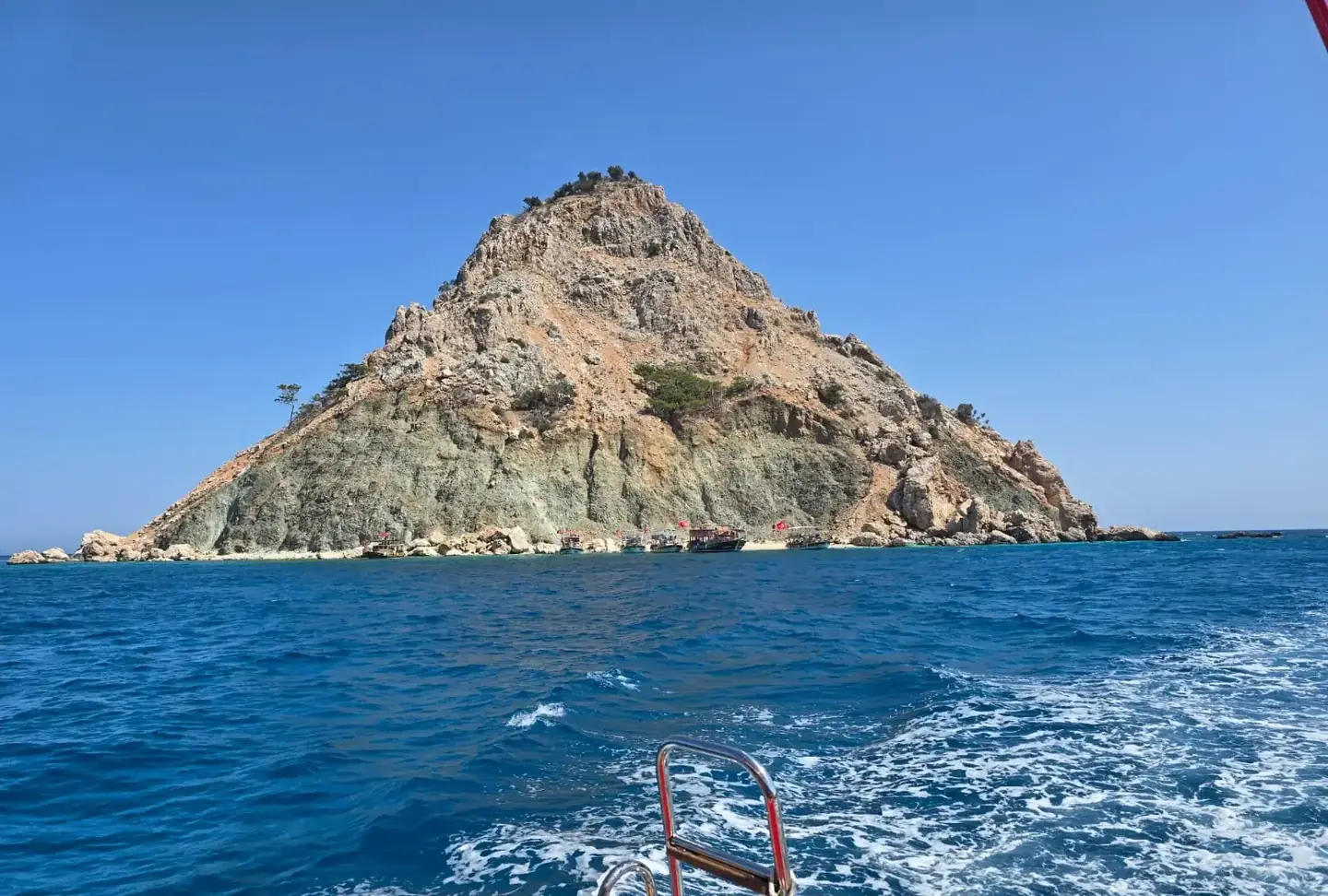
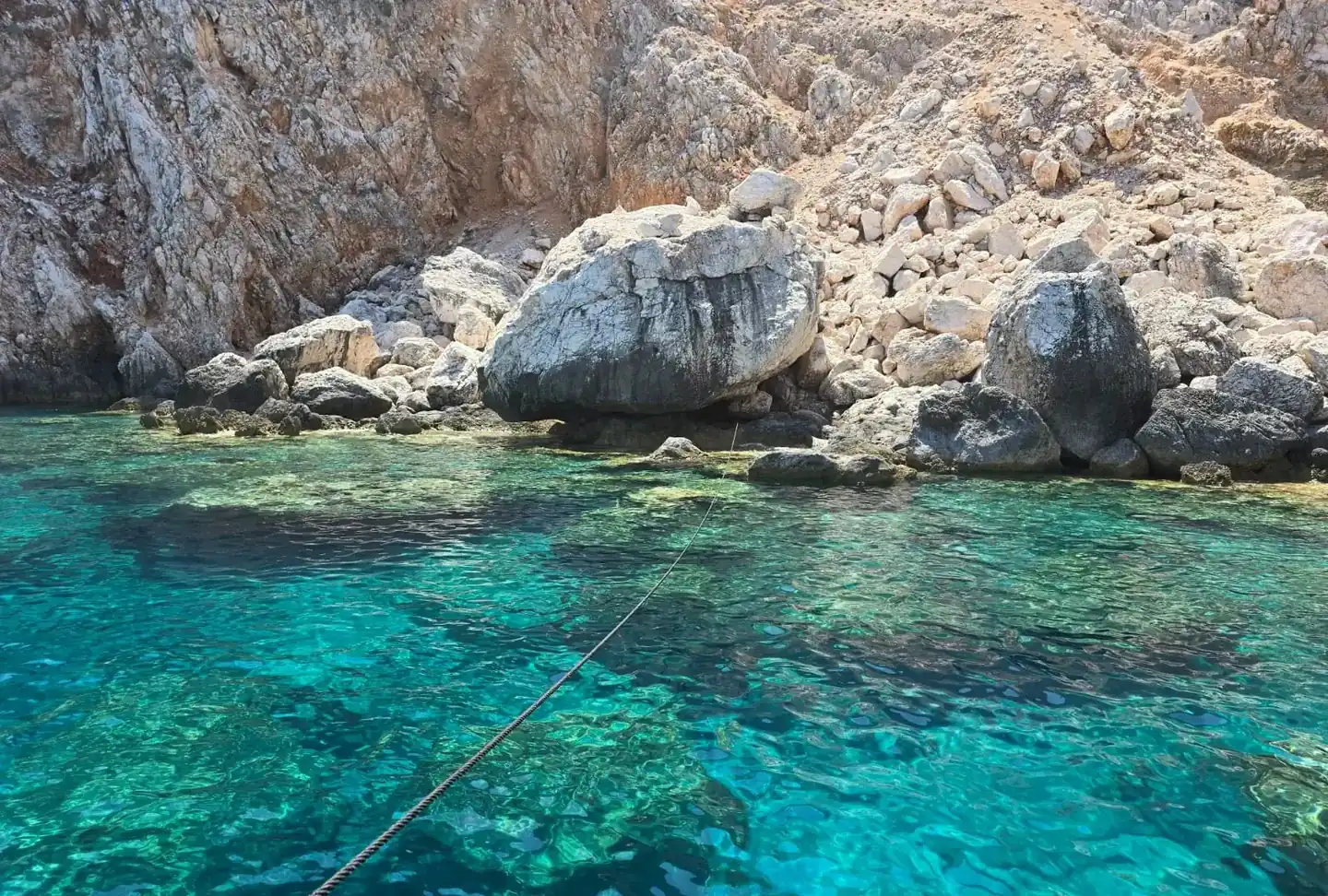
Suluada photographs well for one specific reason: pale sand under shallow water. The sand throws sunlight back up through the sea, and the bay turns a saturated turquoise that needs no editing at all. The catch is that the effect depends almost entirely on the angle of the sun — and on a boat day, you do not choose when you arrive.
So the useful version of this guide is not a list of camera settings. It is a plan: what the light does across the hours you are genuinely on the water, what a moving deck does to your images, and which of the two departures puts your camera where you want it.
The Colour Is Physics, So Plan Around the Sun
Deep water absorbs light and reads as dark blue. Shallow water over pale sand does the opposite — the seabed reflects light back up, the sea keeps its blue-green wavelengths, and the surface glows. That is the whole trick behind every Suluada photograph you have ever seen, and it is why images from the bay look processed when they are not.
Two variables control it. The first is the height of the sun: overhead light gives the strongest turquoise, and low light softens it into something quieter and greener. The second is the sea state. A flat surface lets light pass through cleanly and the bay reads as one solid sheet of colour; chop scatters that light and the same water goes matte. Nothing about the island changes between a great frame and a flat one — only the light does.
Now put your schedule against that. The boat sails from Adrasan at 09:40 and docks back at 16:00. Your shooting window therefore sits across the middle of the day: the hardest light of the day for portraits, and the best light of the day for water. Do not plan for golden hour at the island — the boat is already heading home before the sun gets low. Warm light on this trip belongs to the road, the harbour and the return leg.
Shooting From a Deck That Moves
Everything at sea is handheld, and the deck under you is never still. Keep your shutter speed higher than you would on land, brace your body rather than your elbows, and accept a burst where you would normally take one frame. Salt haze on the front element is the single most common ruined photograph of the day, so a microfibre cloth earns its place in the bag before any second lens does.
The boat anchors near the island rather than tying up at a pier. Where conditions allow, tender boats shuttle guests into the bay. That short transfer is the frame most people remember — wooden deck behind you, the island ahead, water the colour of a swimming pool underneath — and it is also the moment your camera is closest to the sea. Decide before you step down whether the shot is worth it. If it is, the strap goes around your neck, not your wrist.
What to Bring, and What to Point It At
There is no shop on Suluada, and nothing to buy at the anchorage. Whatever you need for the day travels with you:
- A spare battery and a spare card. Neither is replaceable once you have sailed.
- A dry bag or sealed pouch. There is spray on the crossing and wet hands after every swim stop.
- A microfibre cloth, and ideally two — one stays dry.
- Sun protection for you and for the kit. Open deck, hours of it. A towel over a camera bag is a legitimate piece of equipment here.
- Cash. Drinks at the boat's bar are not included in the tour price and are paid separately.
The general packing list lives in what to bring on a Suluada boat tour, and the technique-first companion to this piece is our Suluada photography guide.
As for the subjects themselves, four are worth planning for, and they arrive in roughly this order:
- Domuz Bay — a sheltered cove on the route and one of the swimming stops of the day.
- The Love Cave — one of the island's named features, which most guests photograph from the water rather than from land.
- The twin beaches — the pale sand bay that produces the famous colour. This is the frame you came for.
- The pine-clad cliffs rising straight out of the sea around the anchorage — the detail that quietly tells a viewer this is the Mediterranean and not the tropics.
Which Departure Suits a Photographer?
Both boats leave from the same place. Every cruise to the island sails from Adrasan harbour; your hotel only changes the road leg in front of it.
The Suluada boat tour from Side runs every day, which means you choose your weather rather than your weekday — a real advantage when you are chasing flat sea. Hotel pickup falls in the 05:30–06:00 window across the Side region, there is an optional breakfast stop at Adrasan around 08:30 paid at the local restaurant, and the whole day runs to about 10 hours door to door. The minimum age on this departure is 6.
The Suluada boat tour from Antalya does not sail every day, and we would rather say so than have you plan a shoot around a boat that is not going out. It runs Tuesday and Thursday all year, plus Saturday from April to October, with pickup between 08:30 and 09:00 from central Antalya, Kemer and Beldibi, and about 12 hours in total. Snorkel masks and pool floats are included on this boat, which matters if you shoot in the water as well as above it.
The Honest Trade-offs
Three of them, and you should know all three before you book.
The start is early, particularly from Side. The day is long, and most of it is spent in the open. And the light is not yours to command: this is a scheduled boat with a fixed sailing time, not a charter you can hold back an hour for a cloud to move. If you want the boat to work around your light, that is a private arrangement, handled by enquiry — no fixed price and no fixed schedule attached to it.
What you can control is the date. Cancellation is free up to 24 hours before departure, so you can watch the forecast and move rather than shoot a grey bay. You book free online and pay on the tour day: €40 per adult, €30 per child aged 4–10, infants 0–3 free — the same price from every pickup point on the coast. It is all itemised on the prices page.
One last piece of logistics. Staying in Belek, the Alanya band, Kundu, Konyaaltı, Göynük, Kiriş, Çamyuva or Tekirova? We confirm pickup for those addresses individually, so send us your hotel before you book. And if you are already on the west coast — Adrasan, Olympos, Çıralı, Finike, Demre or Kaş — there is no transfer product for that stretch: guests make their own way and meet the boat at Adrasan harbour.
If you want the version of this ranked purely by what photographs best, read the best Suluada tour for photography.