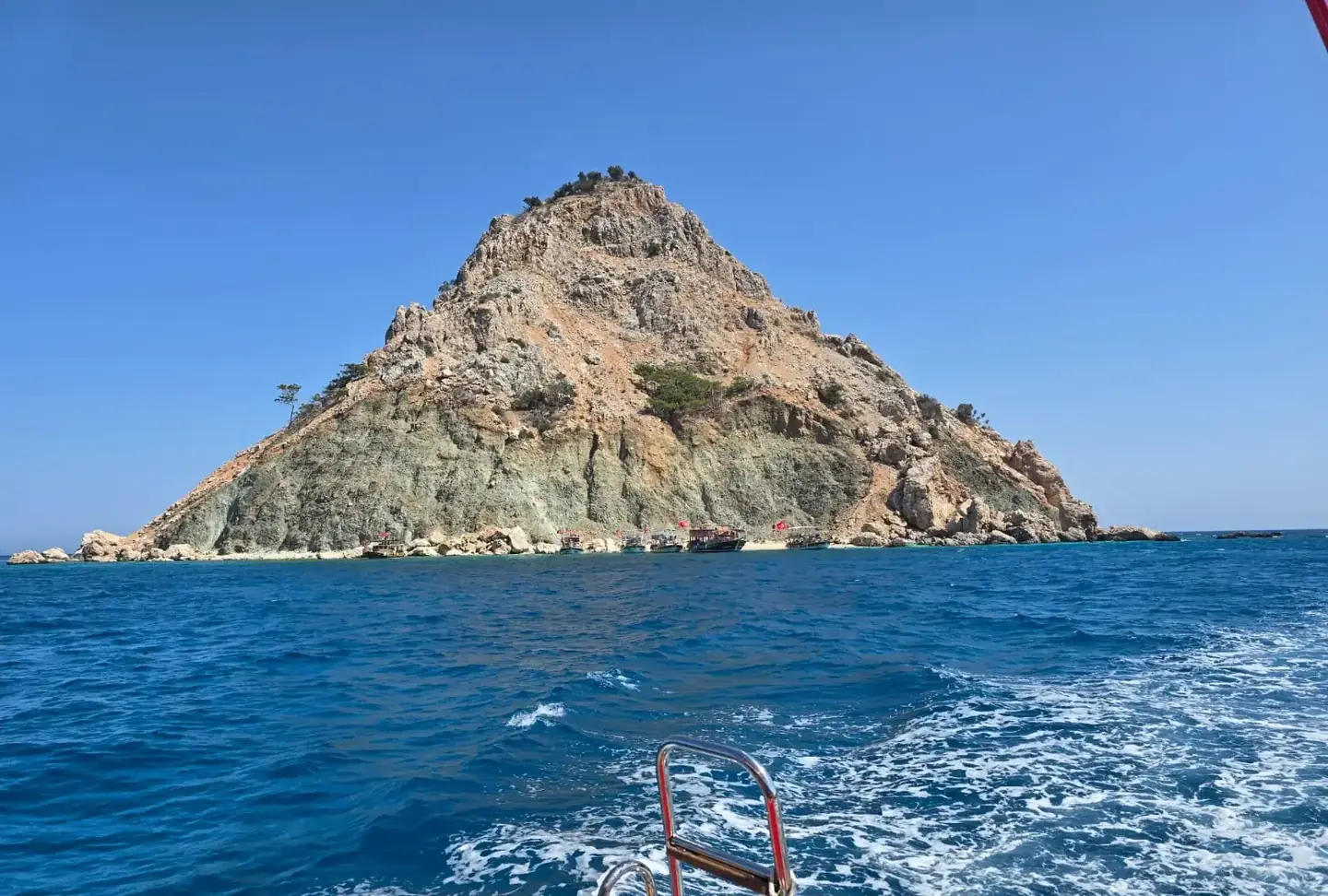
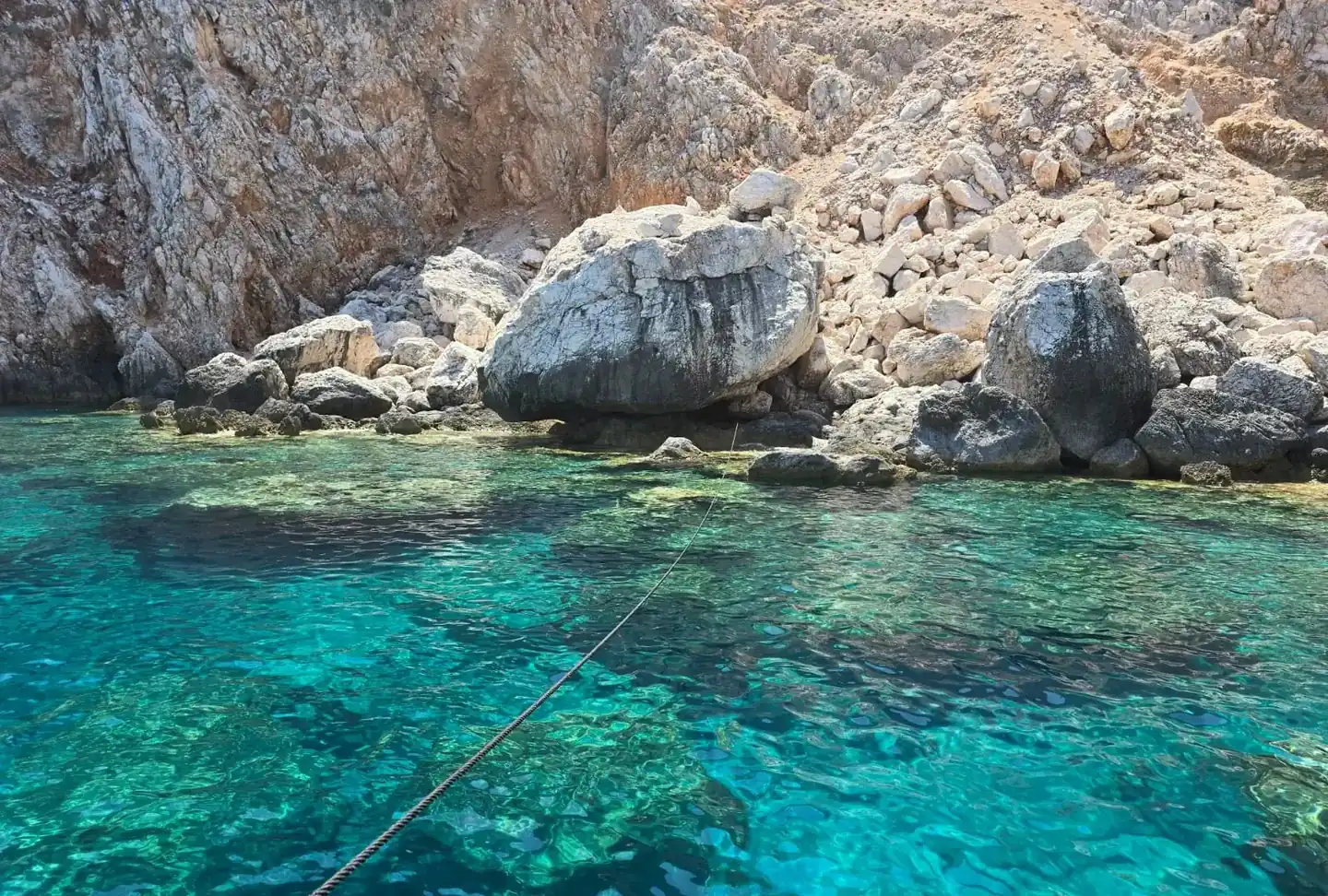
Almost every guest photographs Suluada. Very few get the picture they were imagining, and it is usually not the camera's fault — it is a matter of when you shoot, from where, and what you do with the ten minutes that matter most.
This guide is about getting the frame home. No filters required.
Why the Water Photographs the Way It Does
The turquoise is not a filter — it is a light-coloured sandy bottom reflecting sunlight back up through shallow, clear water.
That is the whole trick, and it is the reason people call this place the Turkish Maldives. Where the pale sand of the bay lies close to the surface, the water reads bright jade and turquoise. Where the bottom drops away, or where rock replaces sand, the same water goes deep blue in the space of a metre. Once you see that boundary, you can compose with it: put the line between shallow and deep through your frame and the picture gains depth without any editing at all.
Two more things shape the look. The island is rocky and pine-clad, so you almost always have dark, textured cliffs behind the bright water — natural contrast that keeps a photo from turning into a pale blue smear. And the shore is small and low, which means a boat, a swimmer or a person standing on the sand gives you the scale that makes the colour believable. Empty water rarely impresses anyone; water with a human figure in it does.
If you want a sense of the setting before you sail, our Suluada island page describes the geography, and why people call it the Turkish Maldives covers the nickname honestly.
The Approach Is Your Best Frame of the Day
The boat sails from Adrasan harbour at 09:40, and the approach to the island — the stretch where it grows from a shape on the horizon into a bay you can pick out — is the single best photographic moment of the trip.
Be ready for it. Not fetching a drink, not queuing to get in, not still in your bag looking for a lens. Get to the bow or the upper deck early, wipe the salt off the front element, and watch the island come up. This is the frame most people miss entirely, because it happens before anyone is thinking about photos.
Some craft notes. Shoot with the sun behind or to the side of you and the water holds its colour; shoot into the sun and it turns to silver glare — sometimes beautiful, usually not what you came for. Expose for the bright water rather than the dark cliffs, because blown-out turquoise cannot be recovered while shadow can. If your phone has a polariser-style setting or you own a real polarising filter, this is the moment for it: it cuts surface reflection and lets the colour underneath come through.
Then keep shooting on the way out. The route runs past sheltered coves — Domuz Bay among them — where a still surface reflects the pines almost perfectly.
At the Island: Beaches, the Cave, and the Tender
Once anchored, three subjects are worth your attention. The island's twin beaches give you that light sand against turquoise — the postcard, and it deserves the cliché. The water below the Love Cave gives you rock, shadow and colour in one frame, which is far more interesting than open water. And the tender boats, where conditions allow, shuttle guests from the anchorage into the bay.
Take that tender ride with your camera ready. It is a low-angle, water-level viewpoint you cannot get from a deck, with the boat behind you and the bay ahead — the shot that actually shows what the day felt like. Then, on the sand, turn around. Everyone photographs the island from the water; the reverse frame, looking back at the anchored boat, is the one your friends will ask about.
Bring somebody into the picture. A swimmer mid-stroke over pale sand, a figure at the waterline, a hand trailing in the water. Scale and life are what separate a photograph of Suluada from a screensaver.
Gear, Salt and Batteries
The practical part matters here more than usual, because of one rule: there is no shop on the island. Nothing to buy, nothing to borrow, from the moment the boat leaves the harbour.
So bring a spare battery or a power bank — you are out for around 10 hours from the Side region and closer to 12 from Antalya, and open-air shooting eats charge faster than you expect. Bring a dry bag or at minimum a zip bag for your phone, because a wet deck and a swim stop are a bad combination for electronics. Bring a microfibre cloth: salt spray on a lens is the invisible reason half of boat-trip photos look soft. And keep a strap or a loop on whatever you are shooting with. Phones go over the side every season, and the sea does not give them back.
Our packing guide covers the rest of the day-bag, and the swimming and snorkelling guide explains what is included on board.
Drones and Other People
If you are bringing a drone, ask the crew before you fly. That is the honest advice: we are not going to publish rules we cannot verify, and the people who know what is permitted at that anchorage on that day are the people driving the boat.
Ask early, ask politely, and accept the answer. Launching and landing from a moving deck near other guests is its own risk, and a captain saying no is protecting people rather than being difficult.
The same courtesy applies without a drone. You are sharing a small boat with people in swimwear who did not agree to be in your holiday album. Photograph your own group freely, ask before you frame strangers, and put the camera down for at least one swim. Suluada is worth seeing with your own eyes as well as through a screen.
Ready to go and get the shot? The Side departure sails every day; the Antalya departure runs Tuesday and Thursday all year plus Saturday from April to October. The price is flat — €40 per adult, €30 per child 4–10, infants free — you book free online and pay on the tour day. Details on the prices page, and the running order in our day itinerary.