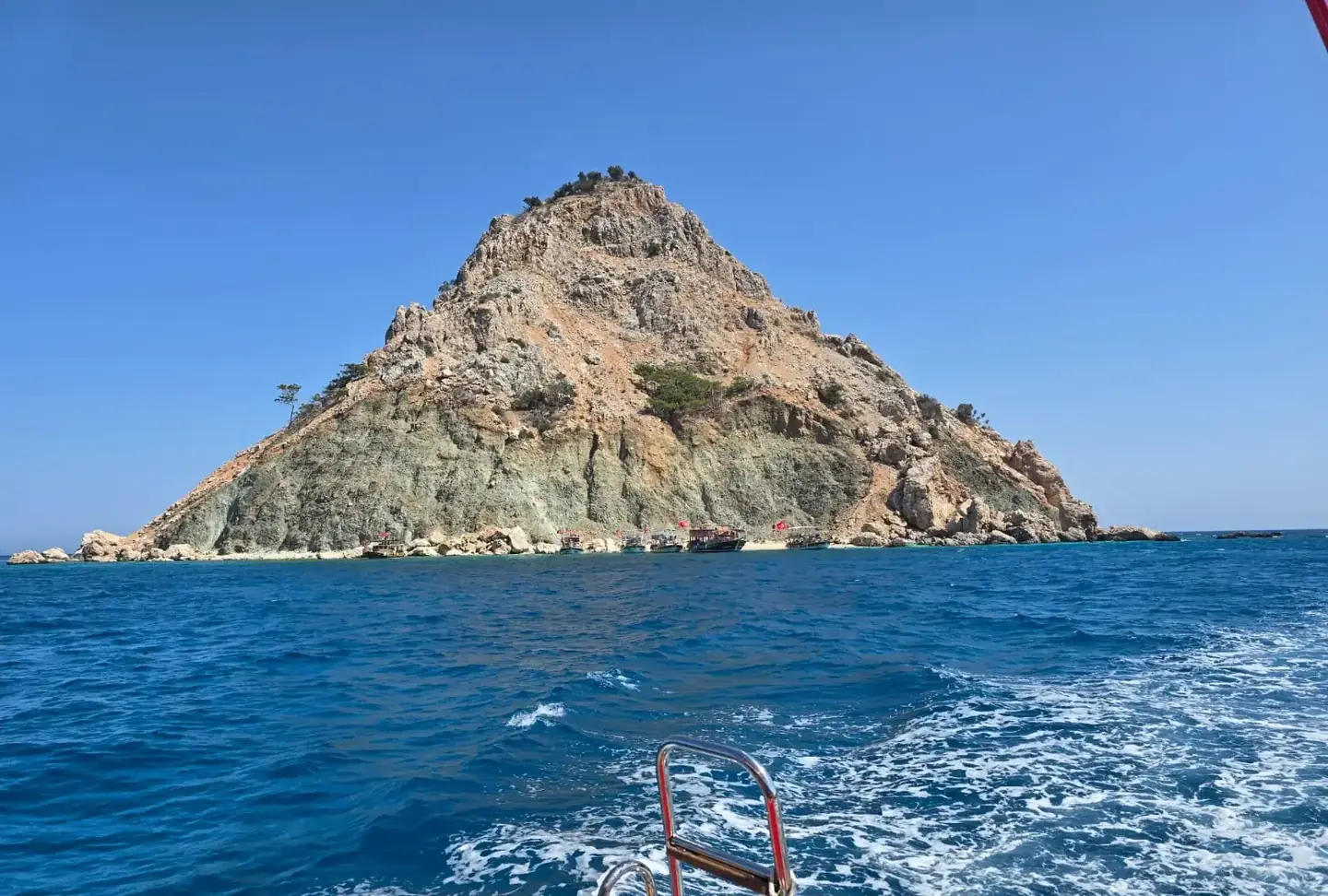
Most guests never feel it. The Suluada day is a coastal cruise with long stops at anchor rather than an open-ocean crossing, and in rough sea conditions the harbour authority can stop departures altogether — so the days that sail are the calmer ones.
That said, "most guests" is not you. If motion is something you already know about yourself, what helps is a plan, not reassurance. Here is what works on this particular boat, on this particular day.
One honest boundary first: we run boat tours, not clinics. Nothing on this page is medical advice, and we will not name a remedy or suggest a dose. If you know you are sensitive to motion, ask your own pharmacist or doctor before you travel and bring whatever they suggest with you — because there is no shop on the island and nothing to buy at the anchorage.
Why This Day Is Gentler Than It Sounds
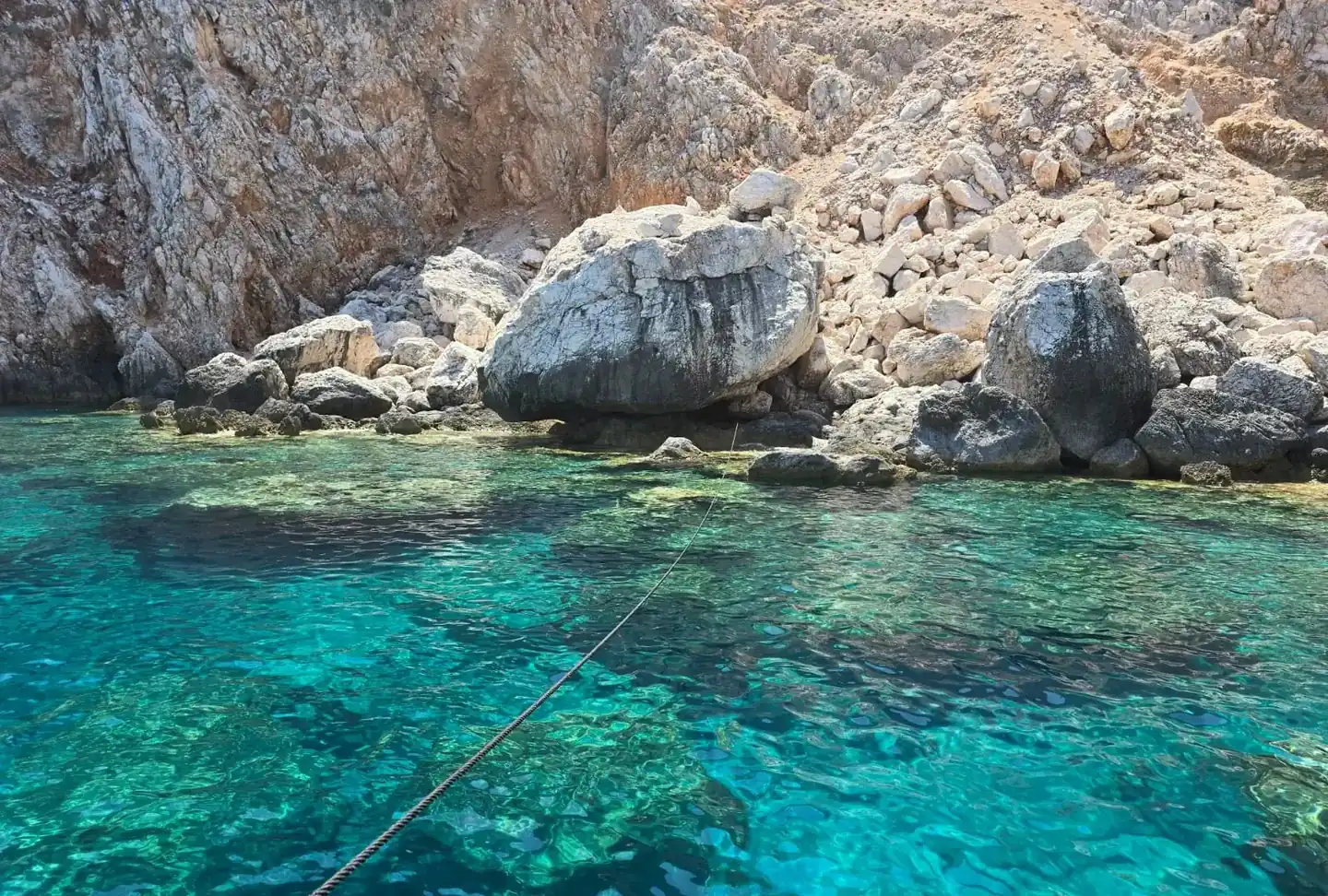
The shape of the day matters more than any trick. Every boat sails from Adrasan harbour and works along a coast of bays. On the Side departure the boat leaves at 09:40 and is back alongside at 16:00, and a large share of the time in between is spent at anchor: swimming stops at the island and in the surrounding bays, including the sheltered cove of Domuz Bay.
That anchoring pattern is what people with motion sensitivity usually find easiest. You are not under way for hours at a stretch. The engine goes quiet, the boat settles, people get in the water, and the day resets. Then a short leg, then another stop.
And the harbour authority sits behind all of it. When the sea is rough it can cancel departures, and if that happens you are rebooked or refunded. Nobody is put out into conditions they should not be in simply because a booking exists. There is more on how the sea behaves through the season in Suluada weather and sea conditions.
Where to Sit, and What to Look At
Two decisions do most of the work, and both are made in the first ten minutes on board while seats are still free.
- Sit low and near the middle of the boat. The ends move the most; the middle moves the least. This is the single most useful line on the page.
- Stay outside, in moving air. Fresh air and an open view beat a comfortable seat in an enclosed space every time.
- Look at the horizon or the coastline, not at your lap. Reading a phone, scrolling photographs or studying a map while under way is what turns a mild wobble into a bad morning.
- Face forwards if you can. Watching where you are going is easier than watching where you have been.
If you are travelling with company, agree the seating plan before boarding rather than negotiating it on a moving deck. The good spots go early, on any boat, anywhere. Our first boat trip tips cover the rest of the boarding routine.
What to Eat and Drink — and What to Skip
An empty stomach is not a strategy, and neither is a heavy one. Something plain before you sail is the usual middle ground.
The Side day gives you a natural moment to do exactly that. Pickup falls in the 05:30–06:00 window, and there is an optional breakfast stop at Adrasan around 08:30, paid at the local restaurant, before the boat sails. Eat lightly there rather than treating it as a buffet challenge.
Then drink water, steadily, all day. It is easy to under-drink on a boat because the wind keeps you cool and you are wet from swimming anyway. Note that drinks at the bar are not included, so bring cash if you want them — and be sensible about alcohol, which does no favours to a queasy stomach, a hot deck or an early start. A heavy night before a 05:30–06:00 pickup is a bad combination on any boat in the world.
Lunch is cooked and served on board while the boat is at anchor: grilled fish or chicken with pasta or rice, the day's Turkish mezes, a seasonal salad, then fruit and Turkish tea. If you would rather eat small, eat small — nobody is counting. More on what arrives and when in the lunch on a Suluada boat tour.
If It Starts Anyway
Act early. Almost everyone who has a hard time on a boat waited too long to move.
Get outside, get to the middle of the boat, put your eyes on the horizon and get air on your face. Cool water on the wrists and the back of the neck helps. Loosen anything tight. Sit rather than stand, and if lying flat is possible, better again. What does not help: going below to have a lie-down in an enclosed space, or trying to tough it out while staring at a screen.
Then tell the crew. On the Side departure the tour languages are English, German, Russian and Turkish, so you can make yourself understood, and crews on this route have seen it many times before — there is genuinely no embarrassment in it. After that, wait for the next stop. Once the anchor is down and the engine is off, most people recover quickly, and a swim in a sheltered bay is a remarkably effective reset.
Plan Around the Sea, Not Against It
If motion is a real concern, choose your date rather than your luck. Calm water is a season question as much as a daily one, and the best time to visit Suluada goes through it honestly.
Then keep your options open. You book free online and pay on the tour day, and cancellation is free up to 24 hours before departure — so a forecast you do not like is not an expensive problem. The price is flat from every pickup point: €40 per adult, €30 per child aged 4–10, infants 0–3 free, set out on the prices page.
One scheduling note. The Antalya departure does not sail every day: it runs Tuesday and Thursday all year, plus Saturday from April to October, with a 08:30–09:00 pickup window from central Antalya, Kemer and Beldibi and about 12 hours door to door. The Side departure runs every day and takes about 10 hours. If you want maximum freedom to move your date around a forecast, the daily one gives you more room to work with. And if you have a specific concern before you book, just ask us — we would rather answer it now than at the quay.